Winterize your Car to Avoid Costly Car Repairs
Winter weather driving can get treacherous. Like it or not, most of us still have to drive when winter weather starts getting bad.
You don’t want to get stranded out there with car problems. Problems and costly car repairs can be avoided by taking the time to winterize your car before it gets cold and snowy.
What exactly do you need to do to get your vehicle ready for winter?
We went in search of the answers and here is what we found. Some of these tips you can do yourself and some of them a mechanic will need to do.
1. Change your vehicle’s oil.
This really should be part of your regular car maintenance. But we get it — sometimes you just don’t think about it. I know we’ve let it go longer than we should at times.
Think of it this way — oil is the lubricant for your engine. You don’t want to leave old oil in your car over the winter because it can thicken and not lubricate your engine the way it should.
Changing oil is one of those things that a lot of people do themselves. If you know how to change the oil in your car, always be sure to check the owner’s manual to see what kind of oil they recommend for the winter months. They may recommend using a thinner oil.
Money saving tip: If you take your vehicle to an auto service like Meineke or Firestone, the oil change packages may include the following:
- Tire pressure check
- Visual brake check
- Fluid Top-off
- 23 point inspection
- Tire rotation
The best thing to do is check the website for the auto service for coupons and what they include with the oil change.
2. Check your car’s antifreeze.
Another tip to winterize your car is to check your car’s antifreeze levels. Your car’s antifreeze needs to maintained at a proper level so that the water in your radiator will not freeze during the winter. Your mechanic can help you make sure that your antifreeze is at the proper level.
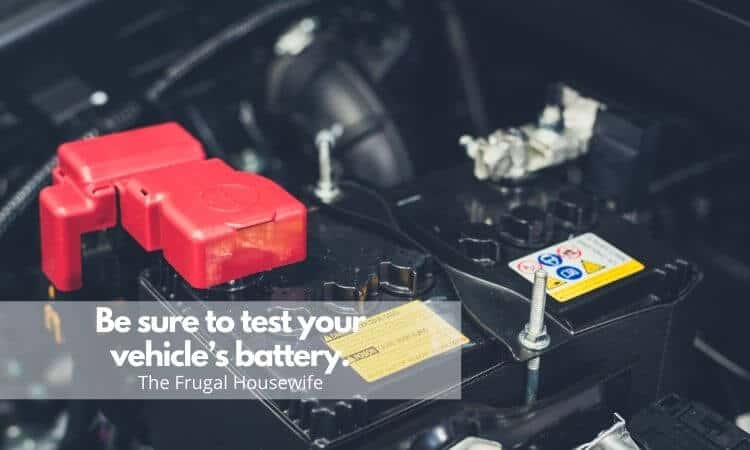
3. Be sure to test your vehicle’s battery.
Colder temperatures are hard on your car’s battery because it can reduce your car’s ability to generate power.
You want to make sure that the battery is holding a full charge. If the battery’s charge is reduced or weak, it can cause problems when you go to start the car. You can check your car’s battery yourself with a voltmeter.
If you are not comfortable checking your car’s battery, take it to an auto parts store or to your mechanic. Most will check it for free.
4. The hoses and belts need to be checked for wear and tear.
This is one of the most important steps to winterize your car. Don’t forget to have your hoses and belts checked when getting your oil changed.
Your car’s hoses and belts can harden, then crack and tear when the temperatures get extremely cold.
Get them checked before the winter weather gets really cold so that you can avoid having them tear when you’re driving this winter.
5. Check the windshield wiper blades for wear and tear.
A good tip to know if it is time to change the blades — If your windshield wiper blades leave a streak on your windshield when it is raining, then it is time to get them changed.
Think about getting winter windshield wiper blades if you live in an area where it snows or ices a lot or if you park your vehicle outdoors in the winter.
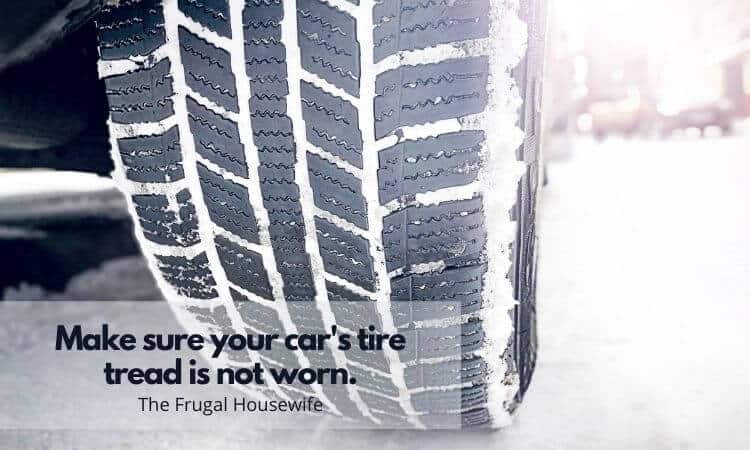
6. Get your tire treads checked.
You don’t want to drive around in the winter on worn tires because a good tire tread is needed to avoid slipping and sliding.
If you live in an area that gets a lot of snow and ice, you also might want to consider having winter tires put on your vehicle.
If the tire tread on your car is good, then make sure to check the tire pressure. Always refer to your owner’s manual to see what they recommend for your vehicle.
Keep a tire gauge in your car at all times. The tire pressure will drop as the temperatures turn colder.
7. Make sure that your spare tire is not worn, has enough air, and is not flat.
How many times have you checked the spare tire in your car? Have you ever had it out? Do you know how to get it out if you need to use it?
It’s better to get the spare tire out and check it before you need it. If the treads are worn and dry-rotted then it is time to replace it. If the tire is in good condition but has low tire pressure, then check your owner’s manual to see how much tire pressure is needed.
8. Have your brakes checked.
Make sure your brakes are in good working order because driving in the snow and ice requires a good set of brakes that can stop your car.
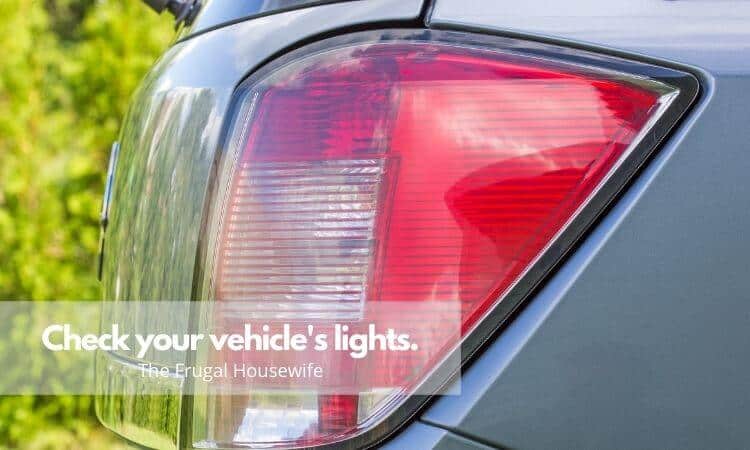
9. Check your car lights.
It becomes hard to see when it starts snowing, raining, or sleeting. It’s even harder if your car’s lights are not working properly. Check the front and rear lights to make sure they are working properly. Make sure the front light covers are not clouded or cracked.
Be sure to check the brake lights to make sure they are working. The driver’s behind you need to be able to see you when you are slowing down or stopping.
Test the hazard lights to make sure they are working because you don’t want to be stranded on the side of the road and not be seen.
10. Test your heater and defroster to make sure they are working.
Don’t wait until winter weather has set in to do this. A simple way to test it is by turning it on.
However, there’s a little more to it, you want to make sure that it is working properly. When you have your vehicle in for the oil change or tune-up, get them to check your heater and defroster.
11. Prepare a winter survival kit to keep in the car.
A survival kit is important to keep in your car at any time. However, when the temperatures get colder and the weather changes it is even more important.
Some basic things to include in your car’s winter survival kit are:
- LED Flashlight
- Hat, Gloves and Extra Shoes
- First-Aid kit
- Tire Repair Kit
- Tire Chains
- Shovel
- Ice Scraper
- Snacks
- Water
12. Add roadside assistance to your insurance.
Roadside assistance is an add-on that most insurance offer. It is a service that helps drivers who need roadside service get help in the event their vehicle becomes disabled or if there is an emergency.
Sometimes road side service is also offered with the vehicle’s extended warranty, service plan or a membership service such as AAA or AARP.
Be sure to keep the telephone number for your roadside service in your car and also in your cellphone contact list.
These are just a few of the ways that we have used to get our cars ready for winter driving. We hope these tips to winterize your car will help you get your vehicle ready for the winter weather.
Do you winterize your car? What are some ways that you get your vehicle ready for colder weather? Leave us a comment! We’d love to hear from you!
Pin for Later